SEO vs SEM in 2026: When to Use Each Strategy for Maximum Traffic & ROI
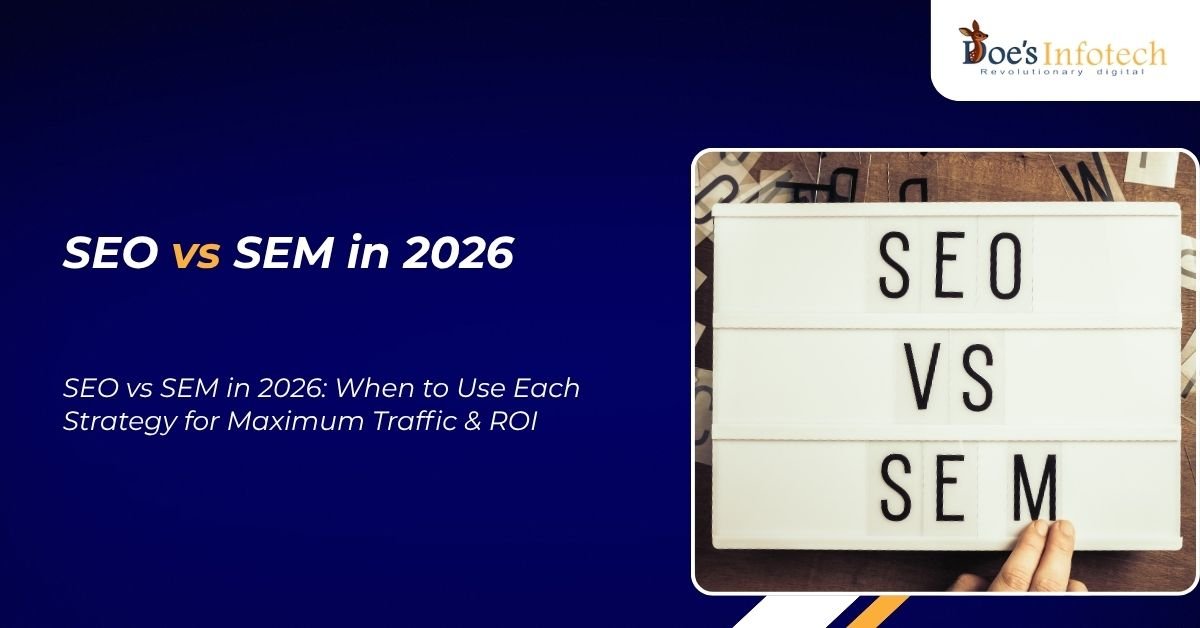
The SEO vs SEM difference has become one of the biggest questions for businesses in 2026. Every business owner wants more traffic, better leads, and stronger sales, but many still struggle to decide where they should invest their money and effort. Some people focus completely on SEO and wait months for results. Others spend heavily on ads and stop getting traffic the moment the budget ends.
The reality is that both SEO and SEM are useful, but they work in different ways. Understanding when to use each strategy can help businesses grow faster without wasting time or money.
If you run a business website, an online store, a travel company, or even a local service business, this guide will help you understand how SEO and SEM actually work in real life.
Understanding the SEO vs SEM Difference
To understand the SEO vs SEM difference, imagine opening a new shop in a busy market.
One shop becomes popular slowly because people trust the products and recommend it to others. Another shop pays for large banners and advertisements to attract customers immediately.
SEO works like long-term trust and reputation. SEM works like paid promotion for instant visibility.
SEO stands for Search Engine Optimization. It focuses on improving your website so that it appears naturally in Google search results. Businesses use content writing, website optimization, keywords, backlinks, and technical improvements to increase rankings.
SEM stands for Search Engine Marketing. It mainly refers to paid advertisements that appear on search engines. Businesses pay to show their website at the top of search results for selected keywords.
Both methods bring traffic, but they serve different purposes. For a deeper comparison, you can explore this guide on SEO vs PPC and which strategy is better for your business.
Why SEO Matters More Than Ever in 2026
Search engines have changed a lot over the last few years. People no longer trust websites that look spammy or overloaded with keywords. Google now gives importance to useful content, user experience, and genuine information.
That is why businesses investing in SEO are building stronger online visibility.
When someone searches for information online, they usually trust organic results more than advertisements. A website that ranks naturally often feels more reliable to users.
SEO helps businesses build:
Long-term traffic
Customer trust
Brand authority
Better visibility
Consistent leads
One good article can continue bringing visitors for months or even years.
For example, if a travel company writes a helpful blog about Rajasthan tours and it ranks on Google, people may continue visiting that page every single day without paying for ads.
This is one of the biggest advantages of SEO.
Benefits of SEO for Long-Term Growth
SEO is not about getting quick results overnight. It is about building a strong foundation for future growth.
Builds Trust With Customers
When your website appears naturally in Google search results, people feel more confident about your business.
Most users know advertisements are paid placements, but organic rankings feel earned. That trust often increases clicks and conversions.
Better Return Over Time
SEO may require effort in the beginning, but it becomes more cost-effective over time.
Instead of paying for every visitor, businesses can continue getting traffic naturally once rankings improve.
This is why many companies see SEO as a long-term investment rather than an expense.
Helps Build Brand Recognition
When users repeatedly see your website on Google, they start remembering your brand name.
Over time, your business becomes more familiar and trusted in your industry.
Supports Informational Searches
SEO works especially well for blogs, guides, tutorials, and educational content.
People searching for:
travel guides
product comparisons
marketing tips
business advice
usually discover websites through organic search results.
Businesses that want long-term organic visibility can benefit from professional digital marketing services for traffic, leads, and growth.
Challenges of SEO
Even though SEO is powerful, it also requires patience and consistency.
Results Take Time
SEO is not instant.
Some websites may start ranking within a few months, while competitive industries can take much longer.
Businesses looking for immediate sales often find SEO too slow in the beginning.
Competition Is Growing
More businesses are investing in SEO now than ever before.
That means ranking on the first page of Google requires:
quality content
better website performance
strong backlinks
useful information
Simple keyword stuffing no longer works.
Search Algorithms Keep Changing
Google updates its search algorithm regularly.
Strategies that worked a few years ago may not work today.
Businesses need to continuously improve their websites and content to maintain rankings.
How SEM Helps Businesses Grow Faster
While SEO focuses on long-term growth, SEM focuses on speed.
SEM allows businesses to appear at the top of search results almost immediately through paid advertising.
This is extremely useful when businesses need:
fast traffic
quick leads
product promotion
seasonal sales
immediate visibility
For example, if a company launches a new service today, it can start receiving visitors through paid ads within hours.
That speed makes SEM valuable for many industries.
Benefits of SEM in 2026
Instant Visibility
The biggest advantage of SEM is immediate exposure.
Businesses do not need to wait months for rankings.
Once a campaign starts, ads can appear in front of customers right away.
Better Audience Targeting
SEM platforms allow businesses to target:
specific locations
devices
interests
demographics
search intent
This helps businesses reach the right audience more effectively.
Strong Conversion Potential
People clicking paid ads are often ready to take action.
Searches like:
book hotel now
buy digital marketing services
hire SEO agency
usually come from users prepared to purchase.
Easy Tracking and Analysis
SEM provides detailed data about:
clicks
conversions
cost per lead
ad performance
return on investment
This helps businesses improve campaigns continuously.
Challenges of SEM
Even though SEM delivers quick traffic, it also has limitations.
Paid Traffic Can Become Expensive
Some industries have extremely high advertising costs.
Businesses in travel, finance, insurance, and legal services often spend heavily on ads.
Without proper strategy, ad costs can increase quickly.
Traffic Stops When Budget Stops
One major weakness of SEM is dependency on advertising spend.
Once campaigns stop running, website traffic usually drops immediately.
This makes SEM less stable as a long-term solution alone.
Requires Constant Monitoring
SEM campaigns need regular optimization.
Businesses must continuously:
improve ads
adjust keywords
monitor costs
optimize landing pages
Without proper management, campaigns can waste money.
SEO and PPC Combination Strategy
In 2026, successful businesses are no longer choosing only one strategy.
Instead, they are combining both SEO and paid advertising together.
An SEO and PPC combination strategy allows businesses to enjoy both short-term and long-term benefits.
Paid ads generate immediate traffic while SEO gradually builds authority and consistent rankings.
This creates balanced growth.
For example, a business launching a new website can use PPC ads initially while publishing SEO content regularly. Over time, organic traffic grows and dependence on paid ads decreases.
This approach is becoming increasingly popular because it reduces risk while improving visibility.
To understand how search supports lead generation, read this guide on SEO lead generation strategies for business growth.
Why Businesses Prefer Combined Strategies
Using SEO and SEM together offers several advantages.
More Visibility on Search Engines
A business can appear in both:
paid advertisements
organic search results
This increases brand exposure and improves click opportunities.
Better Keyword Data
SEM campaigns reveal which keywords convert best.
Businesses can use this information to improve SEO content strategies.
Improved Marketing Balance
SEO supports long-term stability while SEM delivers quick wins.
Together, they create a stronger marketing system.
Paid vs Organic Search Strategy
Choosing a paid vs organic search strategy depends completely on business goals.
There is no single answer that works for every company.
Businesses should focus on SEO when:
they want long-term growth
they have limited advertising budgets
they want to build trust
they create educational content
Businesses should focus more on SEM when:
they need quick sales
they are launching new products
they want immediate visibility
they are running limited-time campaigns
The smartest businesses usually combine both strategies based on their needs.
SEM Strategy for Business Growth
A successful SEM strategy for business growth requires more than simply running advertisements.
Businesses must understand:
customer intent
keyword selection
landing page quality
conversion optimization
audience targeting
The most effective campaigns focus on solving customer problems rather than simply attracting clicks.
Good ads alone are not enough. Businesses also need strong landing pages that encourage visitors to take action.
For online stores, strong landing pages and smooth shopping experiences can be improved with e-commerce development services for better conversions.
Common Mistakes Businesses Make
Many businesses struggle because they misunderstand the SEO vs SEM difference.
Some companies spend all their money on ads without building long-term SEO authority.
Others focus only on SEO and lose valuable opportunities for immediate growth.
Another common mistake is overusing keywords unnaturally.
Modern search engines care more about readability and usefulness than keyword repetition.
Businesses also often ignore landing page quality. Even expensive advertising campaigns fail when websites are slow, confusing, or poorly designed.
Future of Search Marketing in 2026
The world of search engine marketing vs SEO continues to evolve rapidly.
Search engines are becoming smarter and more focused on user experience.
Some important trends include:
AI-powered search results
voice search optimization
mobile-first experiences
personalized search recommendations
better content quality standards
Businesses that focus on helping users genuinely will continue performing better in search results.
Final Thoughts
Understanding the SEO vs SEM difference is essential for businesses that want better traffic and stronger growth in 2026.
SEO helps build long-term trust, authority, and stable traffic. SEM delivers quick visibility, faster leads, and immediate results.
Neither strategy is perfect alone.
Businesses that combine both approaches often achieve the best balance between short-term performance and long-term success.
A smart SEO and PPC combination strategy allows companies to generate traffic today while building stronger rankings for the future.
Whether your focus is a paid vs organic search strategy or creating a complete SEM strategy for business growth, the key is understanding your audience and giving them real value.
Search marketing is no longer just about rankings or advertisements. It is about helping people find the right information, products, and services at the right time. To explore complete growth solutions, visit the Does Infotech
Brij B Bhardwaj
Founder
I’m the founder of Doe’s Infotech and a digital marketing professional with 14 years of hands-on experience helping brands grow online. I specialize in performance-driven strategies across SEO, paid advertising, social media, content marketing, and conversion optimization, along with end-to-end website development. Over the years, I’ve worked with diverse industries to boost visibility, generate qualified leads, and improve ROI through data-backed decisions. I’m passionate about practical marketing, measurable outcomes, and building websites that support real business growth.