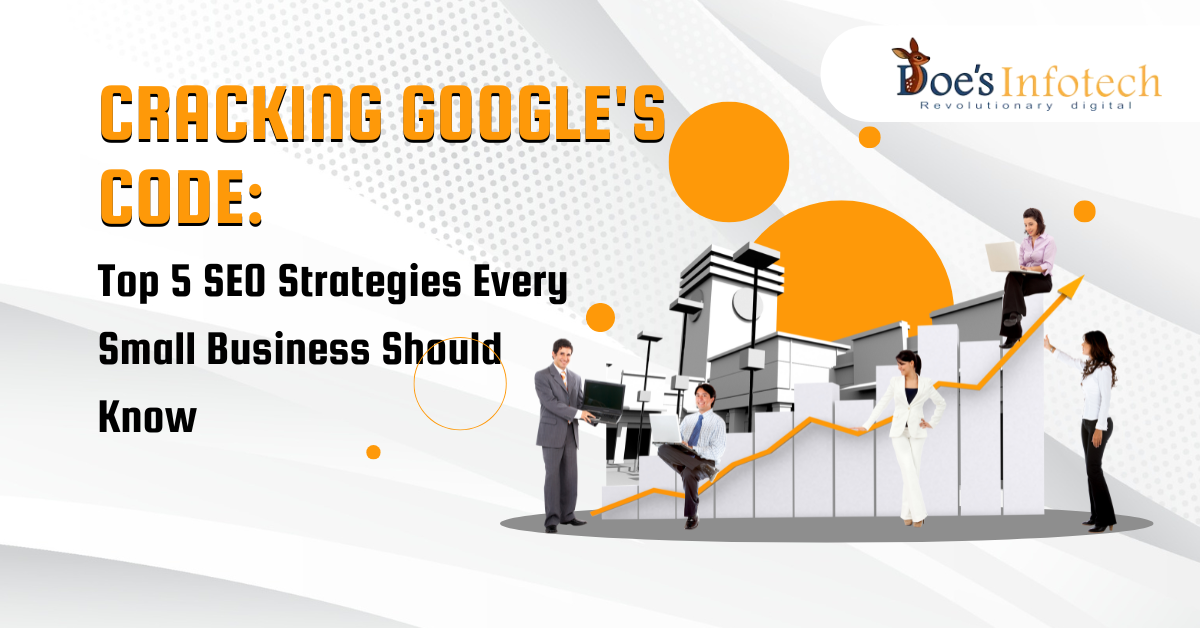
Cracking Google’s Code: Top 5 SEO Strategies Every Small Business Should Know
As a small business owner, it can be difficult to stand out in a crowded marketplace. However, leveraging effective SEO strategies can help you improve your visibility on Google, attract more customers, and ultimately increase revenue. In this article, we will guide you through five essential SEO strategies that can drive growth for your business and elevate your online presence.
Why SEO is Critical for Small Business Success
The Shift from Traditional to Digital Marketing
Traditional marketing methods like print ads and cold calls are no longer enough to reach today’s consumers. With more people searching online for products and services, digital marketing has become an essential tool for business growth. SEO (Search Engine Optimization) helps businesses make the most of this shift by ensuring they appear at the top of Google’s search results, increasing visibility and driving potential customers to their websites.
The Impact of High Google Rankings on Sales & Leads
Ranking on the first page of Google can significantly increase your chances of attracting traffic, which leads to higher conversion rates and more sales. Studies show that businesses ranking in the top positions on Google receive significantly more clicks, driving organic traffic to their website and enhancing brand credibility. Small businesses that invest in SEO reap long-term benefits like increased leads, sales, and brand recognition.
SEO Strategy #1: Mastering Keyword Research for Targeted Traffic
Finding the Right Keywords for Your Business
Keyword research is the cornerstone of a successful SEO strategy. By identifying the right keywords—such as relevant products or services—your business can attract the right audience. Short-tail keywords (e.g., “shoes”) are highly competitive but not very specific, while long-tail keywords (e.g., “buy leather shoes in [Town’s Name]”) are less competitive and often lead to higher-quality leads. Tools like Google Keyword Planner and Ubersuggest can help businesses identify the best keywords for their niche.
Using Local Keywords to Rank in Your Area
For local businesses, using local SEO is essential for attracting customers in the immediate area. Incorporating keywords such as city or town names into your content can help your business appear in location-based searches. Additionally, optimizing for “near me” searches ensures that your business shows up when nearby consumers are looking for services you offer.
SEO Strategy #2: Optimizing On-Page SEO for Maximum Visibility
Title Tags, Meta Descriptions & Headers
Title tags, meta descriptions, and headers (H1, H2, H3) are important for both user experience and SEO rankings. Title tags and meta descriptions should contain relevant keywords to encourage clicks from search results. Well-structured headers make it easier for both users and search engines to understand your content, improving engagement and ranking.
Creating High-Quality, SEO-Optimized Content
Content is king when it comes to SEO. Writing relevant, engaging, and keyword-optimized content will not only attract visitors but will also help you rank higher on search engines. However, avoid keyword stuffing—a practice that can make your content unreadable and result in Google penalties. Instead, focus on delivering value through well-crafted blog posts, product descriptions, and service pages.
Internal Linking & URL Optimization
Internal linking is essential for SEO because it helps search engines discover all the pages on your site. It also improves user experience by providing easy navigation. Additionally, your URLs should be simple, readable, and include relevant keywords. This makes it easier for search engines to index your pages and enhances rankings.
SEO Strategy #3: Boosting Local SEO for Small Businesses
Google My Business Optimization
Google My Business (GMB) is one of the most important tools for local businesses. By claiming and optimizing your GMB profile, you can increase your chances of appearing in Google’s local pack and Google Maps search results. Include accurate business information, such as your address, phone number, website, and hours of operation, and keep your profile updated with images and positive reviews.
The Role of Online Reviews & Reputation Management
Positive online reviews on platforms like Google and Yelp play a crucial role in building credibility and attracting customers. Encourage happy customers to leave reviews, and always respond to both positive and negative feedback professionally. Managing your online reputation enhances trust and can contribute to higher rankings on local search results.
Getting Listed in Local Directories
Being listed in local directories like Yelp, Yellow Pages, and industry-specific directories can enhance your local SEO efforts. It’s important to ensure that your NAP (Name, Address, Phone) information is consistent across all listings, as discrepancies can hurt your local search rankings. These listings also serve as valuable backlinks to your website, improving authority.
SEO Strategy #4: Technical SEO – The Secret to Better Rankings
Improving Website Speed & Mobile Friendliness
Google values fast-loading, mobile-friendly websites. Websites that load slowly have higher bounce rates and lower conversion rates, negatively affecting SEO rankings. Use tools like Google PageSpeed Insights to identify performance issues and optimize site speed. Mobile-first indexing also means that Google primarily uses the mobile version of your website for ranking purposes, so it’s crucial to ensure your site works well on mobile devices.
Fixing Broken Links & Optimizing Site Structure
A well-organized site structure improves user experience and SEO performance. Websites with broken links can frustrate visitors and decrease rankings. Use SEO tools like SEMrush or Screaming Frog to identify and fix broken links. A clean, intuitive site structure with clear navigation helps both users and search engines easily find important content.
Using Schema Markup for Better Search Visibility
Schema markup is a type of structured data that helps search engines understand your content. By adding schema to your pages, you can increase your chances of getting rich snippets—additional information that appears in search results, such as star ratings or event dates. This boosts your click-through rates and provides more visibility in search results.
SEO Strategy #5: Building Authority with Link Building & Content Promotion
Earning High-Quality Backlinks from Trusted Sources
Backlinks are an important ranking factor in Google’s algorithm. Earning high-quality backlinks from authoritative websites shows Google that your site is credible. Focus on acquiring backlinks through guest posting, content partnerships, and collaborating with influencers or trusted websites in your industry.
Guest Posting & Content Partnerships
Guest blogging allows you to write for other websites in exchange for a backlink to your site. This not only boosts your domain authority but also exposes your content to a wider audience. Forming partnerships with other businesses or influencers in your field can further expand your reach.
Using Social Media & PR to Amplify Content
Social media engagement helps improve SEO by increasing visibility and driving traffic to your website. Share your blog posts, videos, and infographics on platforms like Facebook, Twitter, and Instagram to boost content reach. Press coverage and social shares also act as social signals, which contribute to improved search rankings.
Measuring SEO Success: Tracking & Adjusting for Growth
Key SEO Metrics Every Small Business Should Track
Tracking metrics like organic traffic, bounce rate, conversion rate, and keyword rankings is essential to measure the effectiveness of your SEO efforts. Tools like Google Analytics and Google Search Console provide valuable insights into how your website is performing and help you make informed decisions for improvement.
Adjusting SEO Strategies Based on Data Insights
SEO is not a one-time effort but an ongoing process. Regularly monitor your SEO performance and adjust your strategies based on the data. For example, if certain pages are underperforming, conduct A/B tests and optimize content or site structure to improve results. Regular adjustments ensure that your SEO efforts continue to drive traffic and business growth.
Common SEO Mistakes Small Businesses Should Avoid
Keyword Stuffing & Low-Quality Content
One common mistake businesses make is overloading pages with keywords. Keyword stuffing harms rankings and decreases the quality of the content. Instead, write naturally for your audience, focusing on providing valuable, informative content.
Ignoring Mobile Optimization & Page Speed
In today’s mobile-first world, ignoring mobile optimization and slow page speed can hurt your rankings. Google prioritizes mobile-friendly sites and fast-loading pages, so it’s crucial to optimize these aspects for a better user experience and higher search rankings.
Not Updating Old Content or Fixing Broken Links
Outdated content and broken links can negatively impact your SEO performance. Regularly refresh your content to keep it relevant and fix any broken links to maintain a good user experience and avoid penalization from Google.
SEO Strategies in Surat are helping businesses improve their online visibility and outrank competitors in search results. By focusing on keyword optimization, quality content, and strong backlinks, companies can enhance their website performance. With increasing digital competition, effective SEO Strategies in Surat drive better traffic, higher rankings, and sustainable online growth.
Brij B Bhardwaj
Founder
I’m the founder of Doe’s Infotech and a digital marketing professional with 14 years of hands-on experience helping brands grow online. I specialize in performance-driven strategies across SEO, paid advertising, social media, content marketing, and conversion optimization, along with end-to-end website development. Over the years, I’ve worked with diverse industries to boost visibility, generate qualified leads, and improve ROI through data-backed decisions. I’m passionate about practical marketing, measurable outcomes, and building websites that support real business growth.